Business obligations under London recycling laws: what London companies need to know
If you run a business in London, waste is never just "stuff to get rid of". It comes with responsibilities, and those responsibilities can affect your costs, your operations, your reputation, and even whether you stay on the right side of local enforcement. Understanding Business obligations under London recycling laws is not about memorising every technical detail. It is about building a sensible, repeatable system for sorting, storing, handing over, and documenting your waste.
That matters whether you manage a small office, a shop, a cafe, a contractor's yard, or a multi-site operation. One messy bin area can undo a lot of good work. One poor decision about cardboard, food waste, mixed recyclables, or duty-of-care paperwork can become a headache later. This guide breaks everything down in plain English, with practical steps you can actually use on a busy London day. No fluff. No legal theatre.
Contents
- Why Business obligations under London recycling laws matters
- How Business obligations under London recycling laws works
- Key benefits and practical advantages
- Who this is for and when it makes sense
- Step-by-step guidance
- Expert tips for better results
- Common mistakes to avoid
- Tools, resources and recommendations
- Law, compliance, standards, or best practice
- Options, methods, or comparison table
- Case study or real-world example
- Practical checklist
- Conclusion
- Frequently asked questions
Why Business obligations under London recycling laws Matters
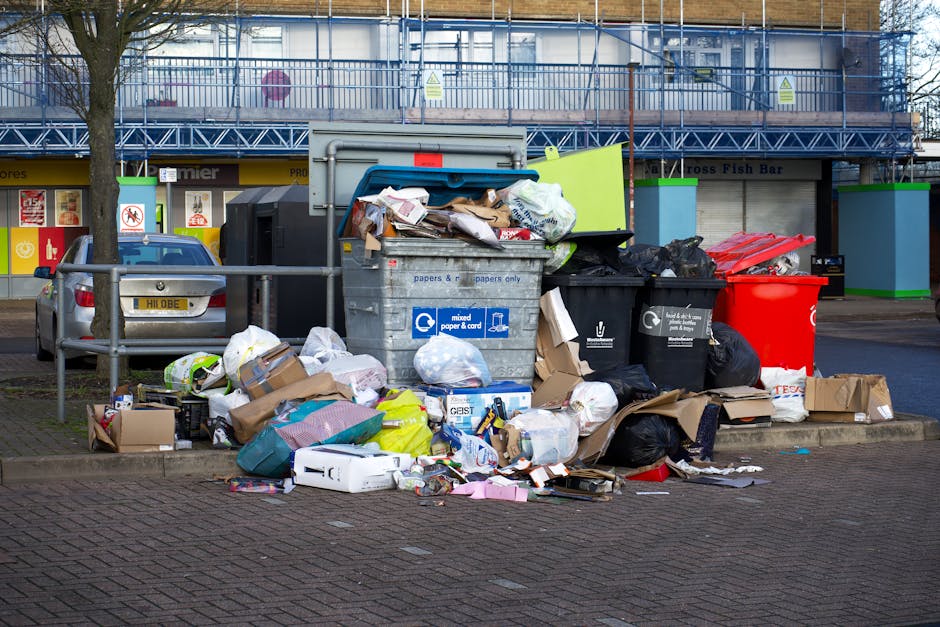
London businesses generate a lot of waste streams, and the city has a strong push toward better recycling, cleaner streets, and less landfill. In practice, that means businesses are expected to separate recyclables sensibly, arrange collection properly, and keep proof that waste has been handled by the right people. It is not glamorous, but it is part of running a professional operation.
There is also a simple commercial reason to care: mixed waste is usually more expensive to deal with than well-sorted waste. If your bin has food, cardboard, plastics, confidential papers, broken fixtures, and general rubbish all dumped together, you often end up paying more and recycling less. That is the painful bit. The bill arrives before the lesson does.
London is a busy place. Space is tight, bins are shared, and collection schedules can be unforgiving. A cafe in Shoreditch, a design studio in Clerkenwell, and a builder working across several boroughs all face different pressures, but the underlying obligation is the same: manage business waste responsibly and make recycling part of normal operations, not an afterthought.
Key takeaway: Treat recycling compliance as part of everyday business housekeeping. If you make it simple for staff, it becomes easier to stay compliant, easier to audit, and easier to control costs.
How Business obligations under London recycling laws Works
At a practical level, business recycling obligations usually work through a few connected duties: identify the waste you create, separate it into sensible categories, store it safely, arrange collection with an authorised waste carrier, and keep records that show where the waste went. That is the broad shape of it.
For most businesses, the day-to-day system looks something like this:
- Waste is separated at source where possible.
- Recyclable material is kept out of general waste.
- Collections are scheduled so bins do not overflow or attract pests.
- Duty of care paperwork or collection records are retained.
- Staff are told what goes where, and what definitely does not.
Different business types produce different waste. A small office creates paper, packaging, food waste, toner cartridges, and old equipment. A builder may generate timber, rubble, plasterboard, metal, and packaging. A retailer might have cardboard, plastic wrap, damaged stock, and occasional bulky items. The law does not care that your premises are cramped or that Friday was hectic. It still expects your waste to be managed properly.
That is why many businesses use a structured service rather than relying on ad hoc clear-outs. A planned approach makes the whole process calmer. If you already rely on business waste removal, the system becomes easier to maintain because regular collection and removal can support better sorting from the start.
And yes, someone in the office will still put a coffee cup in the wrong bin. That is life. The point is to reduce the number of avoidable mistakes, not to pretend people suddenly become perfect after one memo.
Key Benefits and Practical Advantages
Businesses often approach recycling obligations as a compliance box-tick, but the upside is bigger than that. Done well, a recycling system brings order. You know what is leaving the site, where it is going, and how much of it should be recyclable. That kind of clarity is useful when a landlord asks questions, a facilities manager needs proof, or a waste contractor changes over time.
Here are the main practical advantages:
- Lower contamination: cleaner recycling streams are easier to process and less likely to be rejected.
- Better space use: separated waste is easier to store neatly, especially where London premises are tight.
- Fewer collection problems: organised waste areas reduce missed collections, odours, and pests.
- Stronger records: paperwork is easier when collections are regular and waste types are clearly defined.
- Improved staff behaviour: simple systems are easier to follow than vague "please recycle more" notices.
There is also a reputational angle. Clients, tenants, and employees notice whether a business looks cared for. A tidy waste area does not win awards, but it does signal competence. A chaotic one does the opposite, and fast.
If sustainability is part of your brand, your waste practices need to match the message. A polished brochure and a bin store full of mixed rubbish do not sit well together. Let's face it, people can spot the gap.
Who This Is For and When It Makes Sense
This topic matters to almost any London business that produces waste, but it is especially relevant if your operation handles packaging, food, customer-facing waste, stock rotation, or regular clear-outs. If that sounds like your world, you probably need a more disciplined system than "we'll sort it later". Later has a habit of arriving with extra bags.
Common businesses that should pay close attention include:
- Offices and coworking spaces
- Shops and showrooms
- Hospitality venues
- Construction and refurbishment contractors
- Warehouses and light industrial units
- Property managers and letting teams
- Clinics, studios, and professional services firms
It also makes sense if your business generates occasional bulky waste, such as old desks, shelving, furniture, or broken fixtures. In that case, combining regular compliance with occasional clearances can save a lot of awkwardness. For example, a growing office may need office clearance support when replacing furniture, clearing archived items, or preparing for a move.
Small businesses often think the rules only apply to larger organisations. That is not a safe assumption. If you produce business waste in London, you need to manage it properly. The scale may differ, but the responsibility does not disappear just because the team is five people and the kettle is always on.
Step-by-Step Guidance
If you want a practical route through the subject, use this sequence. It is simple, but simple is good. Complicated waste systems tend to fail once people get busy, which, in London, is most of the time.
- Identify your waste streams. List what your business actually throws away in a normal week. Include cardboard, paper, food waste, plastics, glass, metal, wood, electrical items, confidential documents, and any specialist waste.
- Separate at source. Put the right bins where waste is created, not somewhere inconvenient at the back of the building. If staff have to walk too far, guess what happens? The nearest bin wins.
- Label everything clearly. Labels should be obvious, short, and in plain language. Avoid clever wording. Nobody has time to decode a riddle when carrying a box.
- Check storage and access. Waste should be stored securely, kept tidy, and accessible for collection without causing hazards or blocked routes.
- Use an appropriate collection arrangement. Choose a service that matches your volume and waste type. A once-a-month clearance is not the same as a daily commercial collection.
- Keep records. Hold onto invoices, transfer notes, or equivalent paperwork used in your process. The exact documents depend on the waste and collection model, but having a traceable record is the point.
- Train staff and refresh regularly. New starters, temps, and contractors all need the same basic instructions. A five-minute briefing can prevent weeks of mess.
- Review monthly or quarterly. Waste patterns change. You might be throwing away more packaging after a supplier switch, or more broken stock after a fit-out. Revisit the setup before it gets messy.
One useful habit: walk your bin area with fresh eyes. Stand there for a minute. Does it look obvious? Can someone understand it without asking three questions? If not, it probably needs work.
Expert Tips for Better Results
After years of seeing how waste systems succeed or go off the rails, a few patterns show up again and again. The good news is that the fixes are usually straightforward.
- Design for real behaviour, not ideal behaviour. Staff will take the shortest route and use the closest bin. Make the right choice the easy choice.
- Avoid vague categories. "Mixed recycling" can work in some settings, but if it becomes a catch-all for everything, contamination creeps in quickly.
- Keep food waste separate where it matters. Food residue can spoil recyclable materials fast. A soggy cardboard box is rarely helpful.
- Clear down storage areas before they become a dumping ground. Unused packaging and broken fixtures have a way of multiplying quietly.
- Match collection frequency to reality. Too infrequent means overflow. Too frequent means wasted spend. Find the middle ground and test it.
- Use planned clearances for one-off peaks. Refits, moves, and end-of-lease clean-outs can create more waste than your normal system handles. That is where a focused collection makes sense.
If your business deals with furniture, fixtures, or fit-out waste, it helps to separate what can be reused, repaired, or disposed of carefully. Services such as furniture disposal can be useful when office chairs, desks, or storage units reach the end of their life.
A small but important tip: assign one person to own the process. Not to do everything, just to own it. Without a named owner, waste systems drift. That's just how offices work, annoying as it is.
Common Mistakes to Avoid
Most compliance problems are not dramatic. They are ordinary. A bin gets overfilled. Staff are unsure what goes where. A collection note is lost. A contractor is chosen on price alone. Then the business starts cleaning up a mess that was preventable.
- Mixing recyclable material with general waste. This is the big one. Once contamination spreads, the whole load may be less useful.
- Assuming "someone else" handles compliance. If waste leaves your premises, your business still needs to show it was arranged properly.
- Ignoring bulky items. Old furniture, packaging pallets, and construction debris are easy to leave until "later", which often means never.
- Not training temporary staff. New joiners are often the people most likely to make a mistake because they are guessing.
- Using the wrong container or collection method. If your waste stream changes, your system needs to change too.
- Failing to review contract terms. Pricing, access rules, and collection conditions matter. A cheap quote can become not so cheap after the extras appear.
For businesses with renovation or contractor waste, the same lesson applies. Construction-related waste often needs more thought than people expect. If your site is generating timber offcuts, rubble, plasterboard, or packaging, a service like builders waste clearance may be more appropriate than a general tidy-up approach.
The main thing? Do not let the process become invisible. Invisible waste management is usually where the problems start.
Tools, Resources and Recommendations
You do not need a complicated toolkit to improve compliance. In most cases, the best "tools" are practical and low-tech. Labels, bins, simple trackers, and a regular review meeting go a long way.
| Tool or resource | What it helps with | Best use case |
|---|---|---|
| Clear bin labels | Helps staff sort waste quickly | Offices, retail, hospitality |
| Waste area checklist | Checks overflow, cleanliness, access | Sites with shared storage |
| Collection log | Tracks dates, loads, and notes | Any business wanting better records |
| Staff briefing sheet | Standardises what goes in each bin | Businesses with rotating teams |
| Planned clearance service | Removes bulky or one-off waste | Moves, refits, end-of-project clean-outs |
For businesses trying to strengthen their sustainability story, the recycling and sustainability page is a useful place to align waste handling with wider environmental goals. It is worth checking how your day-to-day setup supports the bigger picture, not just the next collection slot.
Also useful: make sure your internal policies are easy to find. A waste process that lives only in someone's head is fragile. A process written down, shared, and reviewed is much more resilient. Boring? Maybe. Effective? Absolutely.
Law, Compliance, Standards, or Best Practice
Business waste in London sits within wider UK waste management expectations, and the exact obligations can depend on the type of waste, the size of the business, and how collections are arranged. Because legal duties can change and local enforcement can differ by borough, it is wise to treat this as a compliance area that needs periodic review rather than a one-time setup.
In plain terms, businesses should generally be able to show that they:
- store waste safely and securely
- separate waste where separation is expected or practical
- use a suitable and authorised collection route
- keep records that prove the waste was handled properly
- avoid causing nuisance, obstruction, or contamination
Best practice is often stronger than the minimum. For example, even if a business could get by with a basic setup, it may be smarter to create clearer segregation, schedule regular collections, and keep better audit trails. That reduces risk and usually makes the operation smoother. A clean loading bay beats a chaotic one every time.
Where specialist waste is involved, care goes up. Electrical waste, confidential material, construction debris, and some contaminated items may require more specific handling. If you are unsure what applies, pause and check before sending it out with the rest. A five-minute check is cheaper than a compliance issue.
And if your business generates frequent commercial waste across multiple floors or departments, structured support from a trusted provider can be a practical way to stay consistent. The service should fit the business, not the other way round.
Options, Methods, or Comparison Table
Not every business needs the same waste setup. The right choice depends on volume, waste type, space, and how often your waste changes. Here is a simple comparison to help with decision-making.
| Method | Best for | Strengths | Limitations |
|---|---|---|---|
| In-house sorting only | Very small volumes | Cheap, simple, flexible | Easily becomes inconsistent |
| Scheduled commercial collections | Regular waste streams | Predictable, orderly, easy to manage | Requires decent space and planning |
| Ad hoc clearance service | Bulky items or one-off spikes | Fast, practical, good for clear-outs | Not ideal as a main ongoing system |
| Mixed system | Most growing businesses | Balances routine and flexibility | Needs clear ownership to stay tidy |
In many real London businesses, the mixed system works best. Daily or weekly waste collection handles the steady flow, while occasional clearances deal with bulky items, refurb waste, or end-of-tenancy clean-outs. If you are dealing with office moves or workspace changes, a dedicated waste removal service can help keep the process clean and efficient.
Sometimes the best method is not the fanciest one. It is the one people will actually use on a busy Tuesday afternoon.
Case Study or Real-World Example
Imagine a small creative agency in central London. The team has grown, the office is busier, and the old waste setup no longer fits. Cardboard from deliveries ends up in the general bin. Staff leave coffee cups in recycling containers. A couple of old desks have been pushed into a corner "for now", and now that corner looks like a storage problem with ambitions.
Nothing is catastrophically wrong, but little by little the system gets messy. The manager notices the bin store smells odd on warm days, the cleaner keeps reporting overfilled containers, and the landlord asks for clearer waste handling arrangements. Not panic, just pressure.
They make three changes. First, they split waste into clearer streams and relabel the containers. Second, they arrange a planned clearance for the old furniture. Third, they introduce a short staff briefing for new starters and contractors. The result is not dramatic, but it is noticeable. The bin area stays cleaner, collections run more smoothly, and there is less guessing.
That is the real lesson. Better compliance rarely feels heroic. It feels calmer. More ordinary. And honestly, that is the point.
For a business in a similar position, especially one with limited floor space, an office-focused clearance can clear the clutter that keeps getting in the way of proper recycling habits. Small fixes, big difference.
Practical Checklist
Use this checklist as a quick internal review. If you can tick most of these off, you are in a much better place than many businesses.
- Have we identified the main waste streams our business creates?
- Are recyclables separated from general waste at source?
- Are bins clearly labelled in plain English?
- Do staff know what goes where?
- Are waste storage areas tidy, secure, and accessible?
- Do we have a reliable collection arrangement that fits our volume?
- Do we keep records of collections and waste handovers?
- Have we planned for bulky items, refits, or seasonal spikes?
- Do we review the system regularly?
- Have we checked that our chosen waste handling approach still suits the business?
Quick self-check: if a new employee had to manage the bins today, could they do it without asking three people for help? If not, the system needs simplifying.
Conclusion
Business obligations under London recycling laws are really about good business practice made visible. Keep waste separate, keep records, keep the site tidy, and keep reviewing what is and is not working. The businesses that do this well usually save time, reduce avoidable costs, and avoid the awkward "we should probably fix that" moment later on.
London moves fast. Your waste system should not need constant heroics to keep up. It should be clear enough that people can use it on a hectic day, and solid enough that it still works when the office is half-empty, the bins are full, or the delivery van arrives earlier than expected. Simple. Calm. Reliable.
If your business is due a reset, start with the bins, the labels, and the records. Then build from there. That tends to work better than trying to fix everything at once.
Get a free quote today and see how much you can save.
For more on the company's approach to service and values, you may also want to review about us, pricing and quotes, insurance and safety, health and safety policy, and terms and conditions.
Frequently Asked Questions
What are the basic business obligations under London recycling laws?
In simple terms, businesses are expected to manage waste responsibly, separate recyclable materials where appropriate, use a proper collection route, and keep records that show the waste was handled correctly. The exact details can vary by waste type and business setup.
Do small businesses in London need to recycle business waste?
Yes, small businesses still need to handle waste properly. The scale may be smaller, but the responsibility does not disappear just because the team is tiny or the premises are compact.
What kind of waste should usually be separated first?
Cardboard, paper, food waste, plastics, glass, metal, and bulky reusable items are often the first places to start. If your business produces specialist waste, that may need separate handling too.
How do I know if my waste contractor is suitable?
Check that the service matches your waste type, volume, access needs, and record-keeping expectations. A good fit is not just about price; it is about whether the system actually works for your site.
What happens if business waste is mixed together?
Mixed waste can lead to contamination, higher disposal costs, and weaker recycling performance. In some cases, it can also create compliance problems if the waste is not handled as expected.
Are office clear-outs treated differently from everyday waste?
Often, yes. Office clear-outs usually involve bulky items, mixed materials, and one-off volume spikes. That is why many businesses use a planned clearance approach for moves, refurbishments, or end-of-lease projects.
Do I need to keep records of business waste collections?
Yes, good records are an important part of responsible waste management. They help show what was removed, when it was removed, and how the waste was managed.
How often should a business review its recycling setup?
At least periodically, and more often if your waste volume, staff numbers, or premises change. A quarterly or monthly review works well for many businesses, though the right frequency depends on your operation.
What is the biggest mistake businesses make with recycling compliance?
The biggest mistake is usually assuming the system will run itself. Without clear labels, training, and review, even a decent setup can drift into confusion quite quickly.
When does a bulky waste clearance make more sense than normal collections?
If you are clearing desks, chairs, shelving, builders' waste, or a pile of mixed items after a move or refit, a clearance service is usually more practical than trying to squeeze everything into standard bins.
Can better recycling actually save a business money?
Often, yes. Cleaner separation can reduce contamination, improve collection efficiency, and make waste handling more predictable. The exact saving depends on your volumes and setup, but the operational benefit is usually noticeable.
Where should I start if my current system is chaotic?
Start with a waste audit, then simplify the bins and labels. After that, fix the collection frequency and train staff. Small, steady changes usually work better than trying to overhaul everything in one go.